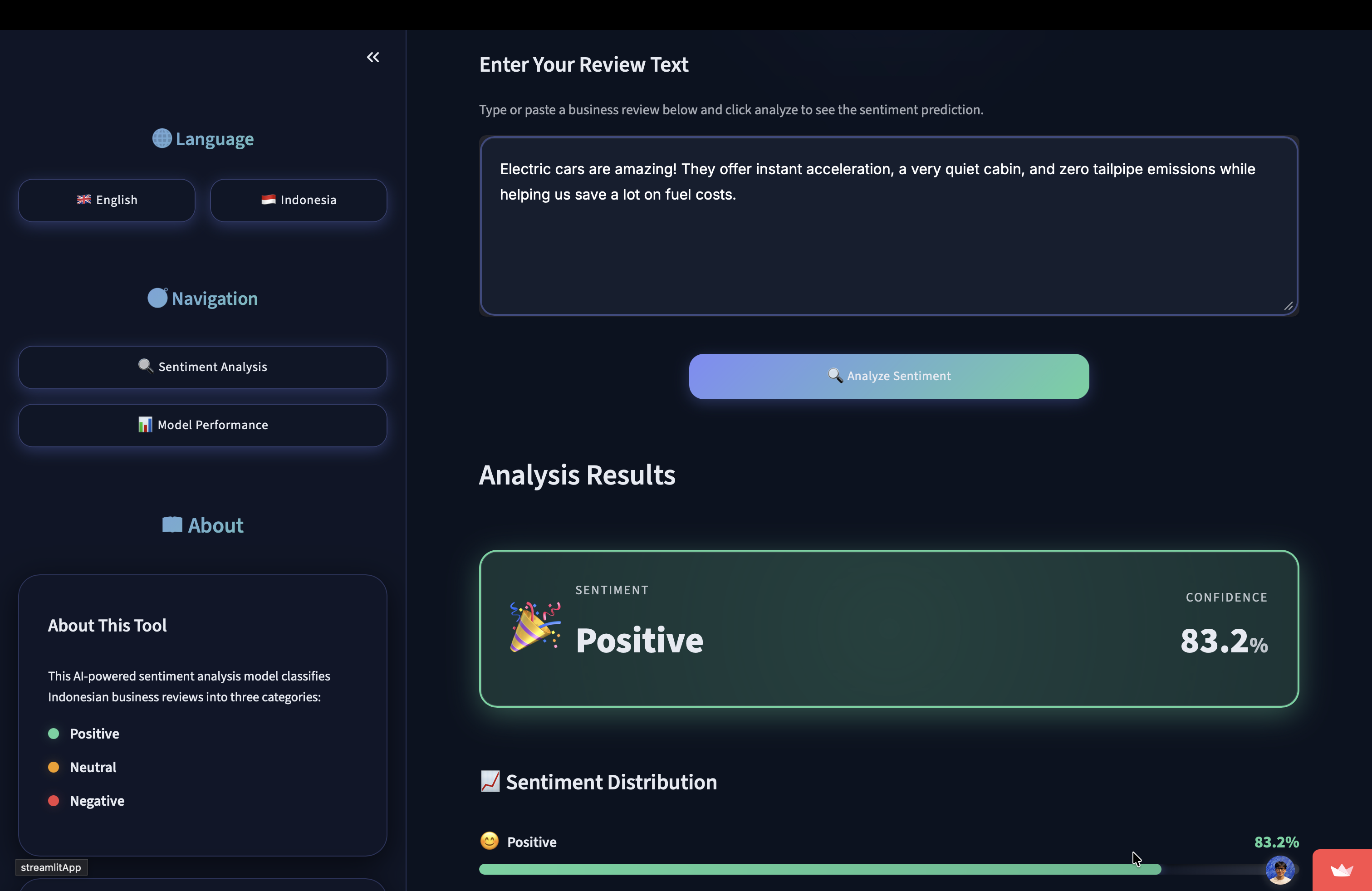
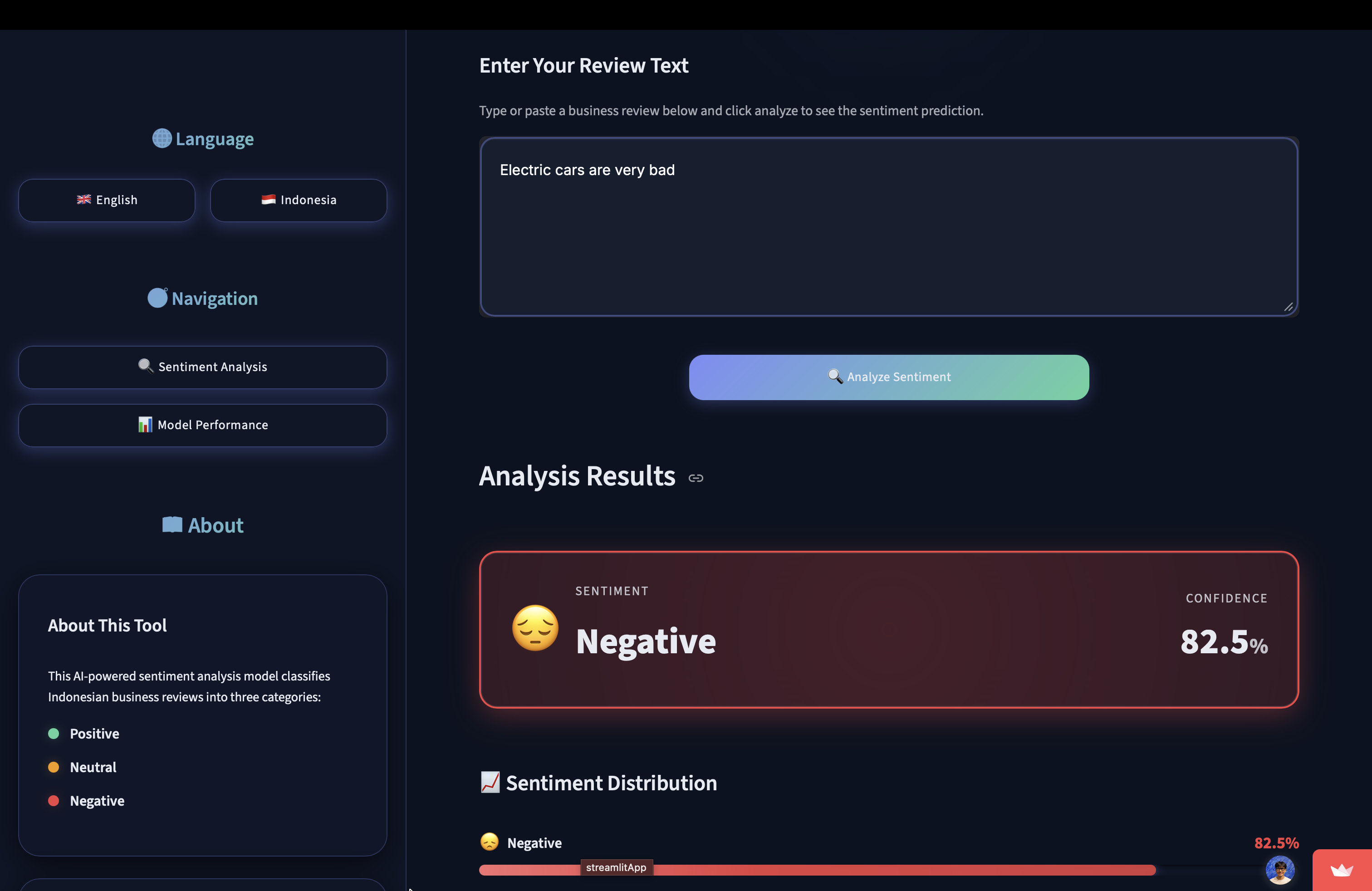
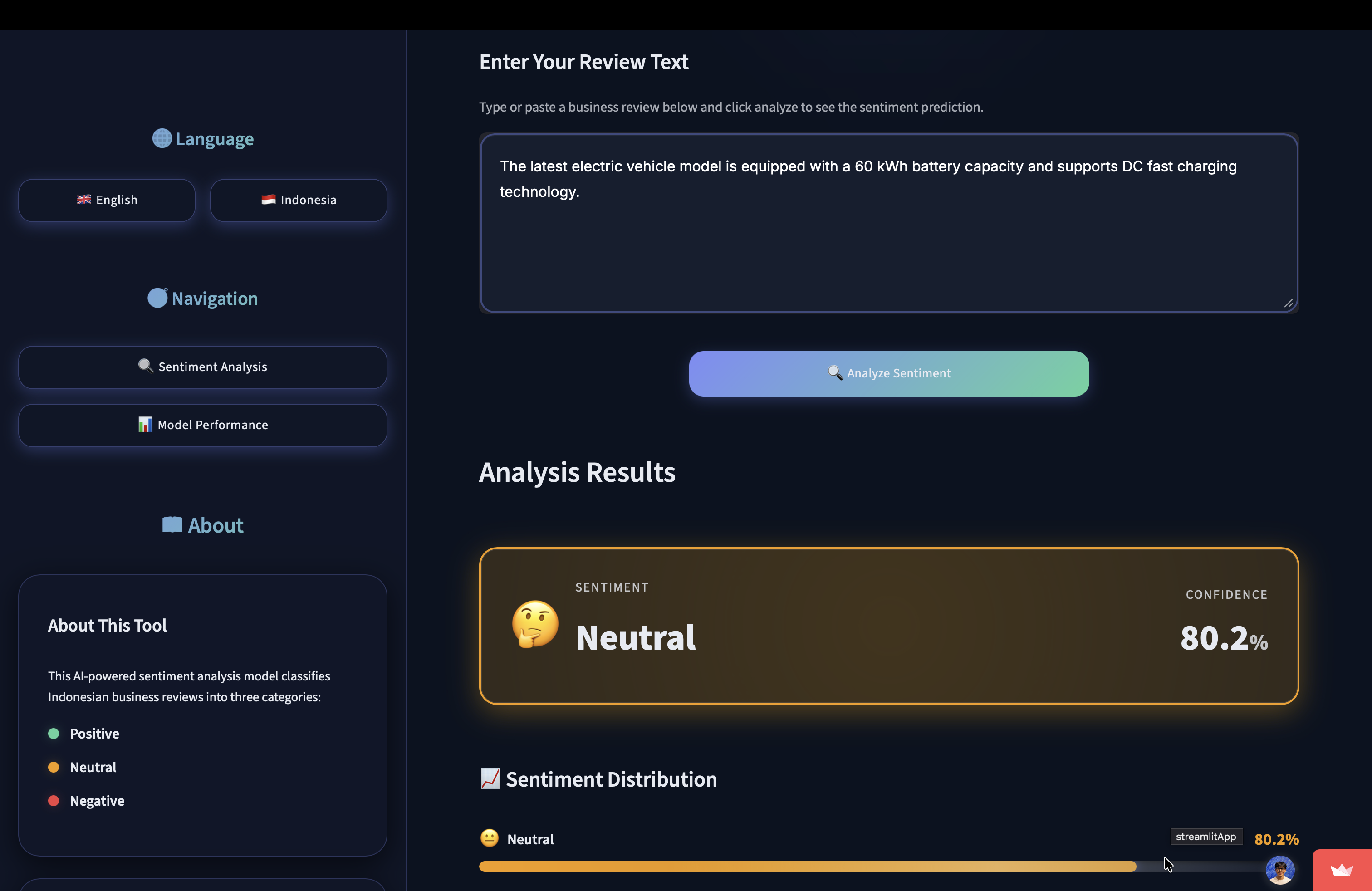
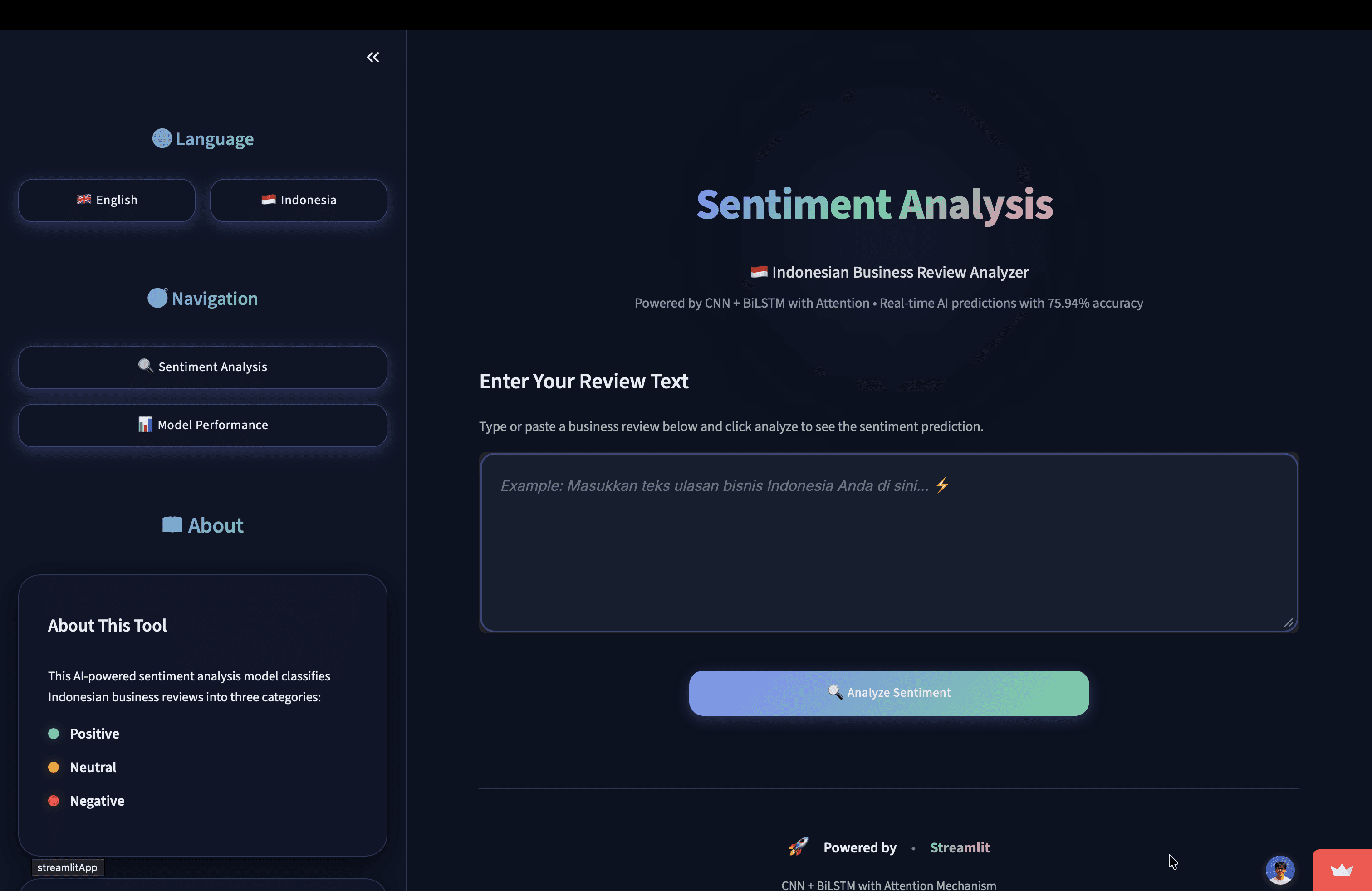
EV Sentiment Analysis (Undergraduate Thesis)
My undergraduate thesis: comparing CNN, LSTM, BiLSTM, and a hybrid CNN+BiLSTM-Attention model to classify Indonesian sentiment toward electric vehicles from Platform X, deployed as a live Streamlit demo.
Tech Stack :
Timeline: September – December 2025
Overview
This is my undergraduate thesis (Tugas Akhir) at Universitas 17 Agustus 1945 Surabaya, the capstone project required to graduate with a Sarjana Komputer degree in Informatics. It compares four deep learning architectures for classifying Indonesian-language sentiment toward electric vehicles, using real public discussion scraped from Platform X (formerly Twitter).
Title: Analisis Sentimen Terhadap Ulasan Online untuk Kendaraan Listrik Menggunakan Deep Learning di Platform X ("Sentiment Analysis on Online Reviews of Electric Vehicles Using Deep Learning on Platform X").
Why this topic: public attention toward EVs in Indonesia has grown enough to generate constant, messy, opinionated discussion on social media. That's exactly the kind of unstructured, subjective data sentiment analysis exists for, and a systematic model comparison on it is useful to three different audiences: researchers extending sentiment analysis / NLP work, the automotive industry looking for a read on what people actually think of their vehicles, and prospective buyers trying to gauge public opinion before purchasing.
The Core Question
Four architectures were trained and compared head-to-head on the same data and the same task: classifying tweets as Positive, Negative, or Neutral.
- CNN — local feature extraction over the text.
- LSTM — sequential context, one direction.
- BiLSTM — sequential context, both directions.
- Hybrid CNN + BiLSTM with Attention — CNN's local feature extraction feeding into BiLSTM's bidirectional context, with an attention mechanism on top.
Data and Labeling
The dataset is Indonesian-language tweets about electric vehicles, collected January 1, 2023 – August 30, 2025 via a custom crawler, with 26,852 samples remaining after preprocessing.
Labeling didn't use a fixed lexicon threshold, which is the default, simpler approach. Instead, every tweet gets a lexicon-based sentiment score (InSet plus a supplementary lexicon), and the label boundaries are set dynamically per-dataset using quantiles: below Q1 is Negative, above Q3 is Positive, and the middle band is Neutral. The point is a threshold that adapts to how this specific dataset's scores are actually distributed, rather than a fixed cutoff that assumes a distribution shape it might not have.